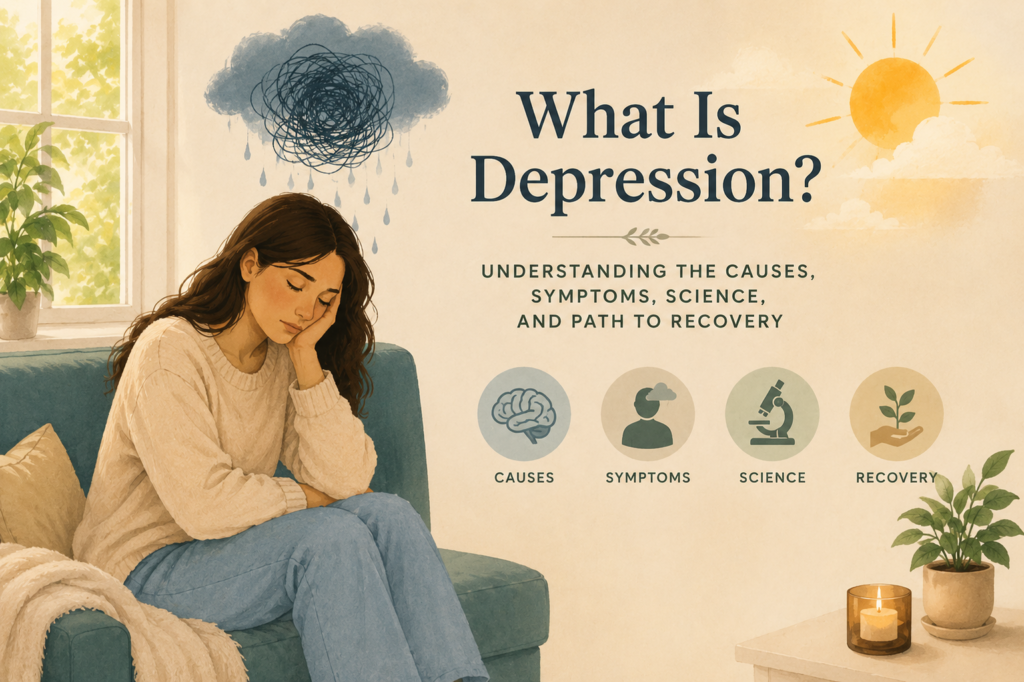
High-functioning depression can be one of the hardest forms of depression to recognize because, from the outside, nothing may look obviously wrong. You may still answer emails, show up to work, take care of your family, pay bills, laugh at the right moments, and keep your life looking reasonably organized. But internally, everything may feel heavy, flat, forced, or exhausting.
That is the confusing part. Many people assume depression has to look like staying in bed all day, crying constantly, missing work, or being unable to function. And sometimes depression does look that way. But depression can also hide behind productivity, achievement, humor, perfectionism, and a calendar full of obligations.
High-functioning depression is not a formal medical diagnosis. It is a common phrase used to describe someone who experiences symptoms of depression while still maintaining daily responsibilities. Cleveland Clinic, ColumbiaDoctors, and Bupa all make this same key point: the person may appear capable or successful while quietly struggling with low mood, fatigue, hopelessness, numbness, or loss of joy underneath the surface.
This article breaks down what depression is, how high-functioning depression can show up, which signs are easiest to miss, and when it may be time to reach out for support.
What Is Depression?
Depression is a common mental health condition that affects the way a person feels, thinks, behaves, and functions. It is not simply a bad mood, a weak mindset, or a temporary lack of motivation. The World Health Organization describes depressive disorder as a condition marked by low mood or loss of pleasure or interest for long periods of time, and the National Institute of Mental Health explains that major depression involves depressed mood or loss of interest most of the time for at least two weeks, along with other symptoms that interfere with daily life.
Depression Is More Than Feeling Sad
Sadness is a normal human emotion. You can feel sad after a breakup, a disappointment, a conflict, a stressful week, or a painful life event. Usually, sadness has a recognizable cause and tends to shift with time, support, rest, or changes in circumstances.
Depression is different. It can feel like a cloud that does not lift, even when things “should” be fine. It can make small tasks feel strangely difficult. It can dull pleasure, drain energy, distort self-worth, and make the future feel hopeless. Some people feel intensely sad. Others do not feel much of anything at all. That emotional numbness can be just as important as sadness.
In many cases, depression also affects the body. Sleep, appetite, energy, libido, digestion, pain sensitivity, and concentration can all change. That is why someone with depression may say, “I don’t just feel sad. I feel physically heavy.” Mayo Clinic describes depression as a mood disorder that can affect how someone feels, thinks, and behaves, and that may lead to emotional and physical problems.
Common Symptoms of Depression
Depression symptoms vary from person to person, but common signs include:
- Persistent sadness, emptiness, or low mood.
- Loss of interest or pleasure in activities.
- Fatigue or low energy.
- Sleep problems, including insomnia or sleeping too much.
- Appetite or weight changes.
- Feelings of guilt, worthlessness, or hopelessness.
- Difficulty concentrating or making decisions.
- Irritability or restlessness.
- Slowed movement or speech.
- Thoughts of death, self-harm, or suicide.
Not every person has every symptom. Some people cry often. Others become numb. Some sleep constantly. Others wake up at 3 a.m. with racing thoughts. Some withdraw from everyone. Others stay socially active but feel disconnected the entire time.
That variety is one reason high-functioning depression can slip under the radar.
Why Depression Can Be Hard to Recognize
Depression is not always visible. A person can be depressed and still look polished, friendly, funny, ambitious, responsible, or “normal.” They may have learned to mask distress because they do not want to worry others, lose professional credibility, disappoint their family, or admit how bad things feel.
There is also a cultural problem: many people measure mental health by productivity. If someone is still getting good grades, earning money, exercising, parenting, or meeting deadlines, people assume they must be okay. But functioning is not the same as flourishing.
Someone can be functioning and suffering at the same time.
What Is High-Functioning Depression?
High-functioning depression is a nonclinical term used to describe depression symptoms in a person who still appears to function well in daily life. They may go to work, maintain relationships, care for children, attend school, keep appointments, and handle responsibilities. But internally, they may feel depleted, hopeless, numb, joyless, or emotionally overwhelmed.
ColumbiaDoctors describes high-functioning depression as a commonly used phrase for someone who appears to be doing well in daily life while struggling with significant depression symptoms internally.
Is High-Functioning Depression a Real Diagnosis?
No. “High-functioning depression” is not an official diagnosis in the DSM. A clinician would usually assess whether someone meets criteria for a condition such as major depressive disorder, persistent depressive disorder, an adjustment disorder, bipolar depression, anxiety, trauma-related concerns, or another mental or physical health condition.
That does not mean the experience is fake. It means the phrase is descriptive, not diagnostic.
This distinction matters because a person may say, “I think I have high-functioning depression,” but a mental health professional may evaluate the full picture and determine that the person has major depression, persistent depressive disorder, burnout, anxiety, grief, thyroid issues, sleep apnea, substance-related mood changes, or something else.
Bupa makes an important point here: symptoms like sleeping much more, eating changes, or emotional numbness may be related to depression, but they can also have other causes, which is why speaking with a health professional matters.
Why Someone Can Look Successful and Still Be Depressed
A person with high-functioning depression may be very good at masking. They know how to perform. They know how to smile, reply, lead meetings, make jokes, post photos, take care of others, and say, “I’m just tired.”
But the cost is high.
They may complete the task, but then collapse afterward. They may attend the dinner, but feel disconnected the whole time. They may get praised at work, but feel nothing. They may keep everyone else comfortable while privately feeling like they are barely holding themselves together.
Cleveland Clinic uses a useful image: a duck gliding across a pond. On the surface, it looks calm. Underneath, its feet are working hard just to stay afloat.
That is the emotional reality many people are trying to name when they search for signs of high-functioning depression.
High-Functioning Depression vs Major Depression
High-functioning depression and major depression can involve many of the same symptoms: low mood, loss of pleasure, fatigue, concentration problems, guilt, sleep changes, appetite changes, and negative thoughts.
The difference is usually visibility and degree of functional impairment. With major depression, symptoms may make it very difficult to maintain work, hygiene, relationships, school, parenting, or basic daily activities. With high-functioning depression, the person may still meet those obligations, but doing so takes a much greater internal effort.
That does not make it mild. It simply means the suffering may be hidden.
Signs of High-Functioning Depression
The signs of high-functioning depression are often subtle because the person may not look “depressed” in the stereotypical sense. They may be the dependable one. The productive one. The successful one. The funny one. The person everyone else leans on.
Here are the signs to watch for.
1. You Keep Up With Responsibilities, But It Costs Everything
One of the clearest signs of high-functioning depression is that you are still doing what needs to be done, but it takes far more effort than anyone realizes.
You answer messages. You finish work. You clean enough. You show up to family events. You meet deadlines. You take care of the kids. You keep the machine running.
But inside, it feels like you are operating on 2% battery.
This is not ordinary tiredness. It is the kind of exhaustion where basic tasks feel strangely expensive. Grocery shopping feels like a mountain. Responding to one text feels like too much. A simple meeting drains the rest of your day. You may not be failing from the outside, but you are paying for every act of functioning with emotional energy you do not really have.
Cleveland Clinic emphasizes this exact point: someone with high-functioning depression may still get responsibilities done, but the internal cost can be enormous.
A useful self-check is: Am I doing things because I feel alive and engaged, or am I doing them only because I have to?
2. You Feel Emotionally Numb or Disconnected
High-functioning depression does not always feel like sadness. Sometimes it feels like nothing.
You might go through your day with a strange sense of distance from everything. You laugh, but it feels automatic. You talk, but you do not feel fully present. You spend time with people you love, but part of you feels behind glass. Life is happening, but you are not really in it.
This emotional numbness can be frightening because it is harder to explain than sadness. If you are crying, people understand something is wrong. If you are numb, you may question yourself: “Why don’t I feel anything? Why am I not excited? Why do I feel detached from my own life?”
Bupa’s research noted that searches around emotional numbness had increased, and it included emotional and behavioral changes among possible signs people investigate when something feels off.
Emotional numbness can also make people delay getting help. They may think, “I’m not sad enough to be depressed.” But depression can look like emptiness, not just sadness.
3. You Have Low Energy Even After Rest
Everyone gets tired. High-functioning depression fatigue is different.
It may feel like no amount of sleep actually restores you. You wake up tired. You move through the day slowly. You push through work, errands, parenting, school, or social obligations, then crash when no one is watching.
You might tell yourself you just need a weekend off. But then the weekend comes and you do not feel better. You sleep in and still feel drained. You cancel plans and still feel heavy. You rest physically, but your mind and body do not feel refreshed.
ColumbiaDoctors lists low energy and constant fatigue as symptoms people with high-functioning depression may experience, and Bupa also includes not feeling refreshed even after sleep among possible symptoms.
This sign is especially easy to miss in high achievers because they often explain fatigue away: “I’m busy,” “I’m stressed,” “I’m just getting older,” “Everyone feels like this.”
But if exhaustion becomes your normal baseline, it deserves attention.
4. You Lose Interest in Things You Used to Enjoy
Loss of interest or pleasure is called anhedonia, and it is one of the core symptoms of depression.
In high-functioning depression, anhedonia can be sneaky. You may still do the activity, but the emotional reward is gone. You go to dinner, but do not enjoy it. You work out, but feel nothing afterward. You watch your favorite show, but cannot get into it. You complete a goal you once cared about, but the satisfaction lasts five seconds or does not come at all.
This is one of the most painful signs because it can make life feel flat. You are not necessarily miserable every second. You are just not lit up by much anymore.
ColumbiaDoctors lists anhedonia, or difficulty feeling joy, among symptoms of high-functioning depression.
A strong question to ask yourself is: Have I stopped enjoying things, or have I stopped giving myself permission to notice that I’m not enjoying them?
5. You’re Irritable, Short-Tempered, or Easily Overwhelmed
Depression is often associated with sadness, but irritability can be just as relevant. This is especially true for people who are constantly forcing themselves to function.
When your inner resources are depleted, small things feel huge. A minor delay, a noisy room, a vague email, or one extra request can trigger an outsized reaction. You may snap at people, feel impatient, or become quietly resentful.
Then the guilt hits: “Why did I react like that? What’s wrong with me?”
ColumbiaDoctors includes irritability and frustration among symptoms that can appear in high-functioning depression, and it notes that in children and adolescents, depressive symptoms may show up more as irritability or anger than sadness.
In adults, irritability may be the emotion that leaks out when sadness, numbness, and exhaustion have been pushed down too long.
6. You’re Extremely Self-Critical
A person with high-functioning depression often looks competent on the outside while running a brutal internal commentary on the inside.
You may think:
- “I should be doing more.”
- “I have no reason to feel this way.”
- “Other people have it worse.”
- “I’m lazy.”
- “I’m failing.”
- “I’m not good enough.”
- “I should be grateful.”
- “I’m a burden.”
This self-criticism can become a trap. Because you are still functioning, you dismiss your pain. Because you dismiss your pain, you push harder. Because you push harder, you become more exhausted. Then you criticize yourself for being exhausted.
Bupa lists regular self-criticism and feeling unworthy of happiness or compliments among possible symptoms of high-functioning depression.
The danger is that self-criticism can feel like motivation. Many people think, “If I stop being hard on myself, I’ll fall apart.” But constant internal attack is not discipline. It is a warning sign.
7. Your Sleep Changes
Sleep changes are one of the most common signs of depression.
With high-functioning depression, sleep problems may look like:
- Trouble falling asleep
- Waking up in the middle of the night
- Waking too early
- Sleeping much more than usual
- Needing naps to get through the day
- Feeling tired despite enough sleep
- Revenge bedtime procrastination because nighttime is the only quiet time
Some people with high-functioning depression stay up late because they dread the next day. Others sleep excessively because sleep feels like the only escape.
NIMH includes sleep problems among symptoms associated with major depressive episodes, and both ColumbiaDoctors and Bupa include sleep difficulty or sleeping too much among symptoms connected with high-functioning depression.
Sleep changes do not automatically mean depression. They can also be related to anxiety, medical conditions, substance use, medications, sleep apnea, hormonal changes, or stress. But when sleep changes appear with low mood, loss of joy, fatigue, guilt, or hopelessness, they are worth taking seriously.
8. Your Appetite or Eating Patterns Change
Depression can affect appetite in either direction.
Some people lose interest in food. Eating feels like a chore. They skip meals, forget to eat, or feel full quickly. Others eat more than usual, especially comfort foods, sugar, or high-calorie snacks, because food becomes one of the few accessible sources of relief.
In high-functioning depression, eating changes may not be obvious to others. You may still look “fine.” You may still go to restaurants, pack lunch, or cook for others. But your relationship with food may quietly shift.
ColumbiaDoctors lists overeating or undereating among symptoms associated with high-functioning depression. Bupa also notes that eating too much may be linked to mental health struggles, while emphasizing that eating changes can have other medical explanations too.
The key is not judging yourself for the pattern. The key is noticing the change.
9. You Struggle to Concentrate or Make Decisions
High-functioning depression can make your mind feel foggy.
You may reread the same email five times. You may start tasks and drift away. You may forget simple things. You may procrastinate because every decision feels too heavy. Even choosing what to eat, what to wear, or how to reply to a message can feel strangely complicated.
This can be especially frustrating for people who are used to being sharp, organized, or efficient. You may still perform well enough that no one notices, but internally, you know everything takes longer than it used to.
Difficulty concentrating and decision-making are recognized depression symptoms and are also listed by ColumbiaDoctors as signs that may appear in high-functioning depression.
A common hidden sign is that you can still do high-pressure tasks when adrenaline forces you to, but you struggle with ordinary tasks that require steady focus.
10. You Use Unhealthy Coping Mechanisms to Get Through the Day
People with high-functioning depression often develop ways to keep going. Some coping tools are healthy: exercise, therapy, journaling, sunlight, medication when appropriate, social support, structured routines.
But other coping mechanisms can become harmful.
These may include:
- Drinking more than usual.
- Using drugs or misusing medications.
- Smoking or vaping more.
- Overeating or undereating.
- Doomscrolling for hours.
- Compulsive shopping.
- Overworking.
- Excessive gaming.
- Constant distraction.
- Avoiding silence because feelings show up there.
Bupa lists unhealthy coping mechanisms, including alcohol, drugs, cigarettes, junk food, and video games, as possible ways people try to boost mood when dealing with high-functioning depression symptoms.
The question is not “Do I ever use comfort?” Everyone does. The better question is: Is this helping me recover, or is it helping me avoid noticing how much I’m struggling?
11. You Feel Guilty for Not Feeling Better
Guilt is one of the most painful signs of high-functioning depression because it attacks you from the inside.
You may look at your life and think, “I have a job. I have people who care about me. I have no right to feel this way.” You may compare your situation to others and decide your pain is invalid. You may feel ashamed that achievements, relationships, or stability do not automatically make you happy.
ColumbiaDoctors includes guilt about not doing or feeling better among symptoms of high-functioning depression.
This guilt is misleading. Depression does not require a “good enough” reason. You do not need to justify your symptoms by proving your life is bad enough. Mental health conditions can affect people with outward success, loving families, impressive careers, and stable lives.
Pain does not become fake just because someone else cannot see it.
12. You Hide How Bad Things Feel
Masking is central to high-functioning depression.
You may become skilled at performing normalcy. You know how to sound upbeat on calls. You know how to say, “I’m good, just busy.” You know how to keep your home presentable enough. You know how to make people laugh. You know how to avoid deeper conversations.
But hiding can become isolating. The more convincing your mask is, the less likely people are to check on you. The less they check on you, the more alone you feel. The more alone you feel, the more you may believe no one would understand.
Cleveland Clinic notes that some people with high-functioning depression may be able to mask or hide symptoms from people around them, creating the illusion that everything is fine.
A sign worth noticing: you may not be lying when you say “I’m fine.” You may be using “fine” as a survival script because the real answer feels too big to explain.
13. Weekends, Nights, or Time Alone Feel Especially Heavy
During the day, structure can carry you. Work, school, parenting, meetings, errands, and obligations tell you what to do next.
But when the structure disappears, the depression may become louder.
This is why some people with high-functioning depression feel worst at night, on weekends, during vacations, after big accomplishments, or when they finally have quiet time. The outside performance stops, and the internal reality catches up.
You may notice:
- Sunday dread.
- Crying after social events.
- Feeling empty after achieving something.
- Sleeping through weekends.
- Avoiding quiet time.
- Feeling worse when alone.
- Keeping yourself busy so you do not have to feel.
This pattern is important because it reveals something productivity can hide: functioning during structured time does not mean you are emotionally well.
High-Functioning Depression vs Burnout, Anxiety, and Stress
High-functioning depression can overlap with burnout, anxiety, and chronic stress. That overlap can make it hard to know what is actually happening.
High-Functioning Depression vs Burnout
Burnout is often tied to prolonged stress, especially from work, caregiving, school, or emotional overload. It can cause exhaustion, cynicism, reduced performance, and a sense of being depleted.
High-functioning depression may include burnout-like exhaustion, but it usually reaches deeper into mood, self-worth, pleasure, hope, and daily life beyond one stressor.
A simple distinction:
- Burnout: “I can’t keep doing this.”
- Depression: “I don’t feel like myself anymore, and I’m not sure anything will help.”
They can also happen together.
High-Functioning Depression vs Anxiety
Anxiety often involves fear, worry, panic, overthinking, and a sense of threat. Depression often involves low mood, loss of pleasure, hopelessness, numbness, and low energy.
But many people experience both. Anxiety may keep a person performing: “I can’t mess up.” Depression may make that performance feel empty: “Even when I succeed, I feel nothing.”
High-Functioning Depression vs Normal Stress
Stress usually improves when the stressor improves. Depression may persist even when things calm down.
If you take a break and feel restored, stress may be the main issue. If you take a break and still feel numb, hopeless, depleted, or joyless, depression may be part of the picture.
Why High-Functioning Depression Often Goes Untreated
High-functioning depression often goes untreated because it does not always create obvious external crisis.
People may think:
- “I’m still working, so I must be fine.”
- “I’m not suicidal, so it’s not serious.”
- “I don’t want to be dramatic.”
- “Therapy is for people who have it worse.”
- “I just need to be more disciplined.”
- “This is just my personality.”
- “Everyone is tired.”
The problem is that untreated depression can worsen. Cleveland Clinic warns that high-functioning depression can be hard to spot even in yourself, and that continuing to push through can eventually lead to burnout or worsening symptoms.
There is also a social reinforcement problem. If you are dependable, people may reward your performance instead of noticing your pain. They praise the output, not the cost.
That is why self-recognition matters. You do not have to wait until your life falls apart before getting help.
When to Seek Help
You should consider reaching out to a healthcare provider or mental health professional if symptoms are persistent, distressing, worsening, or interfering with your ability to feel well, even if you are still functioning.
Seek help especially if you notice:
- Low mood most days.
- Loss of interest or pleasure.
- Ongoing fatigue.
- Sleep or appetite changes.
- Hopelessness.
- Emotional numbness.
- Increased substance use.
- Difficulty concentrating.
- Irritability that feels unlike you.
- Feeling worthless or excessively guilty.
- Thoughts of death, self-harm, or suicide.
ColumbiaDoctors emphasizes that high functioning does not mean harmless, especially when symptoms cause significant distress, impair daily activities, or include safety concerns such as self-harm or suicidality.
If you or someone you know is in immediate danger or thinking about suicide or self-harm, call or text 988 in the United States to reach the Suicide & Crisis Lifeline, or call emergency services. CDC notes that 988 provides confidential, free support 24/7/365 for people who are struggling or in crisis.
What Helps With High-Functioning Depression?
High-functioning depression is treatable, but the right plan depends on the person. A mental health professional can help determine whether symptoms fit major depression, persistent depressive disorder, anxiety, burnout, trauma, a medical condition, medication side effects, substance use, or another cause.
Common treatment and support options may include:
Therapy
Talk therapy can help you understand patterns, reduce self-criticism, process stress or trauma, build coping skills, and change behaviors that keep depression going. Cognitive behavioral therapy, interpersonal therapy, acceptance and commitment therapy, psychodynamic therapy, and other approaches may be useful depending on the person.
Medication
Antidepressants or other medications may help some people, especially when symptoms are moderate, severe, persistent, or recurrent. Medication decisions should be made with a licensed healthcare professional who can consider symptoms, medical history, side effects, interactions, and personal preferences.
Lifestyle Changes
Lifestyle changes are not a replacement for professional care when depression is significant, but they can support recovery. Helpful foundations may include:
- Regular sleep and wake times
- Movement or exercise that feels realistic
- Balanced meals
- Reducing alcohol or substance use
- Morning light exposure
- Time outdoors
- Limiting isolation
- Building small routines
- Reducing unnecessary overload
- Scheduling activities that used to bring meaning, even before motivation returns
Reducing the Mask
One of the hardest but most powerful steps is telling the truth to at least one safe person.
You do not have to explain everything perfectly. You might say:
- “I’ve been functioning, but I’m not doing well.”
- “I don’t need you to fix it. I just need someone to know.”
- “I’ve been feeling numb and exhausted for a while.”
- “I think I need help, but I’m having trouble asking for it.”
High-functioning depression thrives in secrecy. Support begins when the mask comes off somewhere safe.
A Medical Checkup
Because symptoms like fatigue, sleep changes, appetite changes, brain fog, and low mood can have physical contributors, it can be useful to check in with a primary care provider. Thyroid problems, anemia, vitamin deficiencies, sleep disorders, chronic illness, hormonal changes, medication effects, and substance use can all affect mood and energy.
Bupa specifically warns that symptoms people search online may have multiple possible causes, which is why professional context matters.
How to Support Someone Who Seems Fine but May Not Be
Supporting someone with possible high-functioning depression requires paying attention to changes, not just appearances.
They may still be performing well, but you might notice:
- They seem more withdrawn.
- Their humor feels darker.
- They cancel plans more often.
- They seem exhausted after basic things.
- They are more irritable or tearful.
- They talk negatively about themselves.
- They seem emotionally flat.
- They rely more on alcohol, food, work, or distraction.
- They say “I’m tired” all the time.
Instead of saying, “But you seem fine,” try:
- “You’ve seemed really worn down lately. Want to talk?”
- “You don’t have to explain it perfectly. I’m here.”
- “I know you’re handling a lot, but how are you really?”
- “Would it help if I sat with you while you looked for a therapist?”
- “I’m not going to judge you for struggling.”
The goal is not to diagnose them. The goal is to make it safer for them to be honest.
Conclusion
High-functioning depression can be difficult to recognize because it hides behind competence. You may still work, smile, care for others, meet deadlines, and keep life moving. But if the internal cost is constant exhaustion, numbness, hopelessness, irritability, guilt, or loss of joy, that matters.
You do not have to collapse before your pain counts. You do not have to prove you are “depressed enough” to deserve support. And you do not have to keep performing wellness while quietly feeling like you are disappearing inside your own life.
High-functioning depression may not be an official diagnosis, but the suffering behind the phrase is real. If these signs feel familiar, consider talking with a mental health professional or healthcare provider. Getting help early is not overreacting. It is a way of taking your life seriously before the mask becomes too heavy to hold.
FAQs About Signs of High-Functioning Depression
What are the most common signs of high-functioning depression?
Common signs include persistent low mood, emotional numbness, fatigue, loss of interest, irritability, sleep changes, appetite changes, concentration problems, harsh self-criticism, guilt, and feeling exhausted by normal responsibilities. The key feature is that the person may still appear functional from the outside while struggling internally.
Is high-functioning depression an official diagnosis?
No. High-functioning depression is not an official clinical diagnosis. It is a descriptive term people use when someone has depression-like symptoms while still maintaining work, school, relationships, or daily responsibilities. A clinician may diagnose major depressive disorder, persistent depressive disorder, anxiety, burnout-related issues, or another condition.
Can you be depressed and still successful?
Yes. A person can be depressed and still be successful, productive, organized, or socially active. External success does not rule out internal suffering. Many people with high-functioning depression are able to perform well, but the effort required may be enormous.
What does high-functioning depression feel like?
It can feel like going through life on autopilot. You may do what needs to be done but feel emotionally flat, exhausted, disconnected, or quietly hopeless. Some people describe it as smiling outside while feeling empty inside.
How is high-functioning depression different from burnout?
Burnout is often connected to prolonged stress and overwork. Depression usually affects mood, pleasure, self-worth, energy, sleep, appetite, and hope more broadly. They can overlap, and burnout can contribute to depression.
Can high-functioning depression get worse?
Yes. Depression can worsen without support or treatment. Someone may function for a long time and then eventually experience burnout, deeper impairment, or a major depressive episode. Getting help before crisis is a strong and valid choice.
What should I do if I think I have high-functioning depression?
Start by telling a trusted person and scheduling an appointment with a healthcare provider or mental health professional. Track your symptoms, including mood, sleep, appetite, energy, concentration, and any thoughts of self-harm. If you are in immediate danger or thinking about suicide, call or text 988 in the U.S. for crisis support.